NovelSpark - Read Good Stories
NovelSparkBooks & Reference
3.4168.00 Reviews
- Version
- 1.2.1
- Installs
- 100.00K
- Age Rating
- Mature 17+
Screenshots

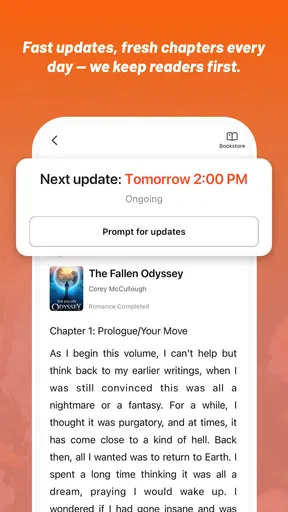
Our Review of NovelSpark - Read Good Stories
 Analysis by Appyee
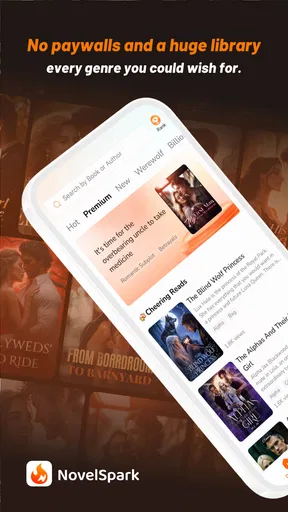
I approached NovelSpark as a reading app first, not as a general-purpose library or a social network. Its appeal is straightforward: it is built around discovering and spending time with stories, which makes it a natural fit for readers who want something more focused than a browser search and less formal than a traditional reference tool. After using it as a casual reading companion, I found that its biggest strength is the way it encourages a quick transition from “I want something to read” to actually opening a story.
NovelSpark sits in the Books & Reference category and comes from NovelSpark, the developer. It is free to install, although in-app purchases range from $0.99 to $119.99 per item. That combination makes the initial decision easy, but it also means I would approach longer-term use with a little awareness of optional spending. The app is rated for Mature 17+ readers, so it is not a suitable recommendation for younger users or families looking for a children’s reading platform.
The store summary, “Dig into Your Favourite Story Experience,” gives the right general impression without explaining how the app fits into a daily routine. In my experience, the useful question is not whether you enjoy reading in theory, but whether you want an app that helps you choose a story quickly and return to it repeatedly. If that sounds like you, this is worth examining. If you need a carefully catalogued academic reference tool, a conventional ebook reader, or a completely predictable free reading service, the match is less certain.
How NovelSpark feels during ordinary reading
I find NovelSpark most useful when I treat a reading break as a small, deliberate session rather than an invitation to browse indefinitely. That approach makes it easier to notice whether the app’s story-focused rhythm suits my habits, while also giving me a practical way to judge how it fits into the rest of my day.
Quick starts matter more than flashy extras
The first thing I pay attention to in a story app is the time between opening it and reaching something I genuinely want to read. NovelSpark works best when I treat it as a low-friction discovery space. I can open it with only a few minutes available, browse for a promising story, and decide quickly whether to continue. That makes it more useful during small gaps in the day than an app that expects me to organize a large personal library before it becomes enjoyable.
Perceived speed is especially important here because reading apps are often judged by their interruptions rather than their feature count. A page that opens promptly feels invisible, while a delayed transition breaks the mood. NovelSpark generally makes more sense as a focused reading session than as an app I leave open all day. When I use it with a clear intention—find a story, read for a while, then close it—the experience feels more controlled and less demanding.
I would not confuse a quick start with a guarantee that every screen will behave identically on every phone. Network conditions, device age, and the amount of content being loaded can all affect how responsive a reading app feels. The practical tip is to judge it during the kind of session you actually expect to have. A short test while connected to a stable network tells you more than a rushed glance at the opening screen.
What happens when a short session becomes a long one
NovelSpark is easy to imagine in an everyday situation: I have a commute, a lunch break, or a quiet half-hour before bed, and I want a story without deciding in advance what to read. In that setting, the app’s focused purpose is helpful. It reduces the mental effort of choosing between unrelated tools and puts the reading decision at the center.
Longer sessions reveal a different trade-off. The more time I spend browsing instead of reading, the more important organization becomes. A discovery-focused experience can be energizing at first, but it can also encourage me to keep looking for the next appealing option. My best workflow is to set a small goal before opening the app: choose one story, read a defined amount, and only return to browsing after I have given that choice a fair chance.
That approach is also useful for readers who are easily distracted. Rather than treating every recommendation or new title as an obligation, I use discovery as a doorway and then stay with one selection. This is a non-obvious strength of the app’s concept: it can support a reading habit when I use its variety to begin a session, not when I allow the variety to replace reading.
Resource demands and the feel of repeated use
A story app should not make a phone feel busy when the main task is simply reading. In my use, NovelSpark is most comfortable when the device has enough free space and the session is not competing with several demanding apps in the background. I would not install it on a phone that is already struggling with storage or general responsiveness and then expect a perfectly smooth experience.
The sensible way to manage resource use is simple: keep the app updated, close it when a session is finished if your phone is under pressure, and avoid judging its performance while the device is already overloaded. The current version is 1.1.0, so I see it as a relatively early product rather than a mature reading platform with years of refinement behind it. That does not make it unusable, but it does make realistic expectations important.
Readers who switch constantly between a story, messaging, video, and several browser tabs may notice more friction than someone who gives the app a dedicated reading window. I prefer the latter approach. It keeps the reading experience calmer and makes it easier to notice whether a problem comes from NovelSpark itself or from the phone handling too many tasks at once.
Stability, interruptions, and recovering a session
Reliability in a reading app is not only about avoiding crashes. It is also about whether I can return to a story without feeling that my place or my intention has been lost. NovelSpark is easiest to trust when I use it consistently and avoid treating it like a temporary browser tab. I recommend closing a session deliberately rather than force-quitting the app in the middle of a transition, especially on an older device.
If the app ever feels slow or fails to respond, my recovery order would be practical rather than dramatic: wait briefly, leave and reopen it, check the connection, and then restart the phone only if the wider device is also misbehaving. That workflow matters because a single delayed screen does not automatically mean the whole app is unreliable. Reading apps can be affected by content loading and network changes, so I would first separate a temporary interruption from a repeatable problem.
The most important reliability habit is to avoid assuming that every reading service behaves like a fully offline ebook reader. If I know I will be somewhere with an uncertain connection, I would prepare my reading choices beforehand where possible and avoid relying on last-minute discovery. This is a meaningful limitation for travelers, commuters, or anyone who reads in places with inconsistent coverage.
Older phones and operating-system limits
NovelSpark supports Android 7.0 and later, which covers a broad range of devices but does not remove the practical differences between an older phone and a recent one. Compatibility tells me whether installation is possible; it does not promise identical responsiveness. On an older handset, I would pay attention to how quickly screens open, how well the app returns from the background, and whether switching away from a story causes the session to reload.
For a newer phone with reasonable free storage, the app should be easier to evaluate on its own merits. For an older or heavily used device, I would test it during a normal reading session before committing to it as my main story app. This is particularly relevant if the phone already has limited memory or a crowded background workload. A lighter, more established ebook reader may be the better choice for someone whose priority is maximum consistency on aging hardware.
Device constraints also affect comfort. Reading for a few minutes and reading for an hour are different tests. I would check text legibility, the ease of returning to the current story, and whether the phone remains responsive after leaving the app and coming back. Those details are more useful than simply confirming that the installation completed.
Where the free model deserves attention
The free entry point is a genuine advantage because it lets me decide whether NovelSpark suits my reading habits before paying anything. I can evaluate the discovery experience, the pace of sessions, and the app’s behavior on my own device without treating installation as a financial commitment.
At the same time, the presence of in-app purchases from $0.99 to $119.99 per item creates a wide spending range. I would not recommend tapping purchase options casually, especially if the app is being used on a shared device or by someone who tends to spend impulsively while immersed in a story. The right mindset is to regard free access as a trial of the experience, not as proof that every part of extended use will remain cost-free.
This pricing structure also changes who should choose it. Readers who are comfortable sampling free content and deciding carefully about optional purchases may appreciate the flexibility. Readers who want one transparent payment, a fixed subscription, or a library where the cost is easy to understand at a glance may feel more comfortable with a conventional ebook service instead.
Who will get the most from it
I would recommend NovelSpark to adults who enjoy discovering fiction in small sessions and want a dedicated place to explore stories. It is particularly appealing if you often say, “I want to read, but I do not know what to choose.” The app’s value is strongest at that moment of indecision, when a focused story platform can be more inviting than a large general library.
It may also suit readers who are building a routine from scratch. My practical suggestion is to connect it to a repeatable moment—a morning coffee, a commute with reliable connectivity, or a short evening wind-down—rather than opening it randomly whenever boredom appears. That turns discovery into a habit instead of an endless browsing loop.
I would skip it if your main requirement is scholarly reference material, extensive personal document management, or a polished offline archive of books you already own. I would also be cautious if you need a reading environment appropriate for children, because the Mature 17+ rating clearly places it in an adult audience. Someone who dislikes optional purchases or wants completely predictable costs may likewise prefer another category of reading app.
How it compares with familiar alternatives
Compared with a standard ebook reader, NovelSpark feels more oriented toward finding a story than managing a collection that I have already purchased or imported. A traditional reader is usually the stronger choice when typography controls, offline access, notes, bookmarks, and long-term library organization are the main priorities. NovelSpark makes more sense when the discovery step is the part I find difficult.
Compared with a general web browser, it offers a more intentional reading destination. A browser can reach almost anything, but that freedom also brings distractions, inconsistent page layouts, and the temptation to leave the story. NovelSpark’s focused identity is useful when I want to read rather than research broadly. The trade-off is that a browser remains more flexible for articles, reference pages, and mixed media.
Compared with subscription-based reading services, the free installation lowers the barrier to trying the app, while the broad in-app purchase range means I need to pay closer attention to how extended access is handled. A subscription service may be preferable for readers who want a predictable catalog arrangement and a clearly defined recurring cost. NovelSpark is better suited to someone who values immediate exploration and is willing to make careful decisions about optional spending.
My practical routine for using it well
I get the most value by treating each visit as a three-step process. First, I open the app with a specific amount of time in mind. Second, I choose one story instead of repeatedly scanning for a perfect option. Third, I stop browsing once I begin reading. This sounds simple, but it protects the app’s main benefit—easy discovery—from becoming its main distraction.
For a new user, I would spend the first few sessions testing three things: how quickly the app reaches a readable story on the usual connection, how smoothly it resumes after I switch away, and whether the available choices genuinely match my taste. I would also observe how the device behaves after repeated opening and closing. These checks answer the questions that matter more than a store summary: does it fit my phone, my schedule, and my reading preferences?
I would keep purchase decisions separate from the excitement of a compelling chapter. If a paid option appears, I would pause and consider whether it solves a real reading need or merely extends a moment of enthusiasm. That small delay is especially worthwhile because the available purchase amounts span from a very small option to a much larger one.
My verdict after weighing speed, stability, and fit
NovelSpark is a promising choice for adult readers who want a story-discovery app that can turn spare minutes into reading time. Its strongest qualities are focus, accessibility through a free install, and a format that encourages me to begin without first building a complicated library. The experience feels most convincing when I use it for deliberate, contained sessions on a device that is not already overloaded.
My reservations are equally practical. I would not choose it as a replacement for a serious ebook archive, a children’s reading tool, or a fully offline reference library. The early version number, dependence on sensible device conditions, and broad in-app purchase range all suggest that users should test the experience carefully and make spending decisions slowly.
Overall, I would recommend giving NovelSpark a try if your real problem is choosing a story and getting started. The best reason to use it is not that it replaces every reading app, but that it can make the first step feel easy. Test it during a normal reading break, see how your phone handles repeated sessions, and decide from there. For the right adult reader, that focused approach is enough to make it a useful addition to a daily routine.
Privacy and Permissions
See what permissions an app requests and how it handles your data.
- Phone
- read phone status and identity
- Photos/Media/Files
- read the contents of your USB storage, modify or delete the contents of your USB storage
- Storage
- read the contents of your USB storage, modify or delete the contents of your USB storage
- Camera
- take pictures and videos
- Wi-Fi connection information
- view Wi-Fi connections
- Device ID & call information
- read phone status and identity
- Other
- view network connections, change network connectivity, full network access, run at startup, draw over other apps, control vibration, prevent device from sleeping, Google Play license check
Verdict
Strengths of NovelSpark - Read Good Stories
- Large selection of stories across multiple genres and moods.
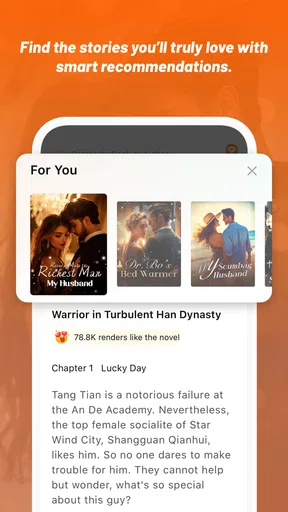
- Personalized recommendations help uncover books matching your interests.
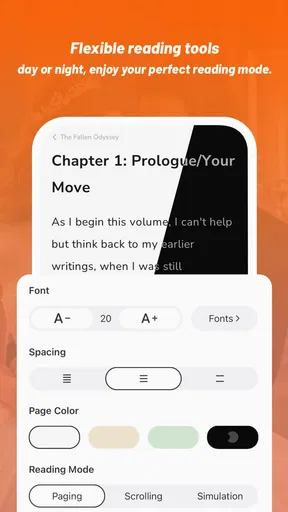
- Clean, distraction-free reading interface is easy to navigate.
- Regularly updated content keeps the library feeling fresh.
- Reading progress syncs conveniently across supported devices.
Limitations of NovelSpark - Read Good Stories
- Some stories or chapters may require in-app purchases or subscriptions.
- Content quality can vary between authors and individual titles.
- Offline reading may be limited to selected content or premium users.
- Recommendations may become repetitive after extended use.
- The app may require an account before saving progress or preferences.
Similar Picks in This Category
View All
Google Play Books & Audiobooks
Google LLC4.7

네이버 - NAVER
NAVER Corp.3.5

Wattpad - Read & Write Stories
Wattpad.com3.7

King James Bible - Verse+Audio
Ozion4.8

Bible Offline-KJV Holy Bible
Bíblia Offline4.9

Amazon Kindle: Reading App
Amazon Mobile LLC4.8
Frequently Asked Questions
What is NovelSpark - Read Good Stories?
NovelSpark - Read Good Stories is a mobile reading app designed for users who enjoy discovering and reading serialized fiction. It typically brings together stories from different genres, such as romance, fantasy, mystery, drama, and science fiction, in a convenient digital library. Before downloading, readers should check whether the available catalog, language options, and story updates match their personal preferences.
Is NovelSpark - Read Good Stories free to use?
The app may be available to download for free, but access to every feature or chapter can depend on its monetization system. Some stories may be readable without payment, while others could require virtual coins, subscriptions, advertisements, or individual purchases. It is worth reviewing the in-app pricing, trial terms, and renewal conditions before spending money or activating a premium plan.
Can I read stories offline in NovelSpark?
Offline reading depends on the version of the app and the permissions provided by each story or account plan. Many reading platforms allow users to save selected chapters for later use, but downloaded content may have limitations, such as expiring access or requiring an initial internet connection. Check the app’s download options before relying on it during travel or without mobile data.
Does NovelSpark offer stories in multiple languages?
NovelSpark’s language availability can vary according to the app version, region, and content library. Some titles may be offered only in English, while others could include translated editions or language settings for the interface. Users should inspect the store description and browse the catalog after installation to confirm that their preferred reading language and translation quality are available.
Is NovelSpark - Read Good Stories safe for children and teenagers?
The app’s suitability for younger readers depends on the stories included, since fiction platforms can contain romance, mature themes, violence, emotional situations, or other content intended for adults. Parents and guardians should review the age rating, privacy policy, account features, and available parental controls. It is also advisable to check individual story descriptions before allowing unsupervised access.
